
The Supreme Court allowed a pregnant woman and her child into India on humanitarian grounds after they were pushed into Bangladesh.

Supreme Court judge Justice B V Nagarathna stated that judicial independence in the modern era includes freedom from algorithmic influence, emphasising that AI should only assist judges, who must ultimately decide based on constitutional values and human judgment.

The Supreme Court has directed the Uttar Pradesh DGP to form an all-women SIT to investigate the rape and murder of a four-year-old girl in Ghaziabad, following concerns about the local police's handling of the case and allegations of denial of treatment by private hospitals.
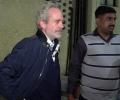
The Supreme Court has referred Christian Michel James' plea for release in the AgustaWestland VVIP chopper scam case to another bench. The Delhi High Court previously dismissed his petition, but James continues to challenge his detention and the India-UAE extradition treaty.
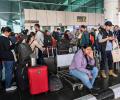
The Supreme Court declined to expedite a hearing regarding the widespread IndiGo flight cancellations, acknowledging the government's intervention in the matter.
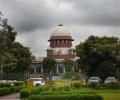
The Supreme Court refused to entertain a PIL seeking to prevent discrimination and violence against citizens from the northeast and other regions, stating that identifying persons on grounds of race, region, sex, and caste would be a regressive step.

Union Education Minister Dharmendra Pradhan has expressed strong disapproval of a chapter in an NCERT Class 8 textbook addressing judicial corruption, prompting government action and a Supreme Court ban on the book's circulation.

The Supreme Court of India will hear a suo motu case concerning victims of digital arrest, a growing form of cybercrime where fraudsters impersonate officials to extort money from victims.

The Supreme Court of India dismissed a Public Interest Litigation (PIL) seeking safety measures for tourists in remote hilly areas of Jammu and Kashmir, criticizing the petitioner for seeking publicity without a genuine public cause. The PIL was filed in response to a terror attack in Pahalgam that killed 26 people, mostly tourists. The court stated that the petitioner had a history of filing similar PILs primarily for publicity.

Justice Surya Kant, on his first day as Chief Justice of India, established a new procedural norm requiring written requests for urgent case listings, with oral requests reserved for extraordinary circumstances. He also addressed various cases, including those related to extrajudicial killings and the removal of a lawyer from a government post.
Supreme Court judge Justice B V Nagarathna stated that judicial independence in the modern era is not just freedom from external power, but also from algorithmic influence, while speaking at a conference in Bengaluru.
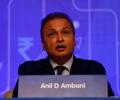
The Supreme Court has deferred the hearing on a PIL alleging large-scale banking fraud involving the Anil Dhirubhai Ambani Group and its firms to May 8.
The Supreme Court of India has ruled that a minor child cannot be forced to carry a pregnancy to term, urging the government to amend laws to allow rape survivors to terminate unwanted pregnancies beyond 20 weeks.

The Supreme Court has allowed podcaster Ranveer Allahbadia to travel abroad after the Assam and Maharashtra governments said the investigation against him was complete. Allahbadia, known as BeerBiceps, was booked for his comments on parents and sex on comic Samay Raina's YouTube show "India's Got Latent".
The Supreme Court has stated that roads cannot be blocked for religious activities and that while religious denominations have autonomy in worship, the government can interfere if secular activities are affected.

The Supreme Court of India has asserted its jurisdiction to determine what constitutes a superstitious practice within a religion, during a hearing on petitions related to discrimination against women at religious sites.

The Supreme Court questioned the chief priest of the Sabarimala Ayyappa Temple regarding the constitutionality of preventing believers from touching the deity, during hearings on discrimination against women at religious sites.
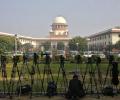
A nine-judge Supreme Court bench has commenced hearing on petitions related to discrimination against women at religious places, including the Sabarimala temple, and the scope of religious freedom across faiths.

The Supreme Court on Tuesday stayed trial proceedings against former Karnataka chief minister BS Yediyurappa in a sexual harassment case filed under the Protection of Children from Sexual Offences Act.

The Supreme Court dismissed a plea from a lawyer facing money laundering charges in the AgustaWestland VVIP helicopter deal, challenging a PMLA provision. The court stated that the lawyer should face trial like any other citizen.

The Supreme Court has referred activist Teesta Setalvad's application for the release of her passport to a three-judge bench, in a case related to alleged fabrication of documents in the 2002 Gujarat riots.

The Supreme Court of India has dismissed a Public Interest Litigation (PIL) seeking a nationwide policy for menstrual leave for women students and workers, citing concerns about potential negative impacts on female employment and the reinforcement of gender stereotypes.
Karnataka Chief Minister Siddaramaiah has called for the establishment of a Supreme Court bench in South India to improve accessibility to justice. Speaking at a conference on Artificial Intelligence in the judiciary, he also highlighted the need to address algorithmic bias and ensure judicial independence in the age of AI.

The Supreme Court has criticised the Ghaziabad police's investigation into the rape and murder of a four-year-old girl, summoning senior officials and demanding a court-monitored probe.

Chief Justice of India considers shifting Supreme Court hearings to virtual mode due to severe air pollution in Delhi after experiencing its effects firsthand.
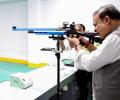
The Supreme Court has agreed to consider a plea seeking action against Assam Chief Minister Himanta Biswa Sarma over a viral video allegedly showing him taking aim and firing with a rifle at members of the Muslim community.

The Supreme Court has declined to entertain petitions seeking action against Assam Chief Minister Himanta Biswa Sarma regarding a viral video, advising petitioners to approach the Gauhati High Court instead.
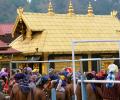
The Supreme Court of India questioned the Centre regarding the eligibility of non-devotees to challenge the customs of the Sabarimala temple in Kerala, during a hearing on religious freedom and discrimination against women at religious sites.

The final day of the GOAT India Tour will also see Messi exchanging greetings with two members of the Indian cricket team at the Ferozshah Kotla Stadium.
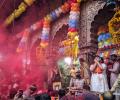
The Supreme Court has stated it will not make structural changes to religious practices at the Bankey Bihari temple in Vrindavan, hearing a petition challenging administrative decisions affecting traditions.
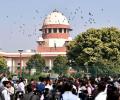
The Supreme Court has directed the Delhi police commissioner to ensure the appearance of lawyer Mukut Nath Verma, who is accused of making defamatory allegations against Supreme Court judges and members of the SCBA election committee. The court has previously issued bailable warrants against Verma, but police have been unable to locate him.
'Except facilitating builders in default, it is not doing anything else. Better to just abolish this institution.'

Nearly two-thirds (63.7 per cent) said they had, at some stage, found the profession discouraging.

The Centre has informed the Supreme Court that the restriction on women of menstruating age entering Kerala's Sabarimala temple is a matter of religious faith and denominational autonomy, falling outside the purview of judicial review. Solicitor General Tushar Mehta argued that courts should not apply 'secular standards of reason' to religious practices.
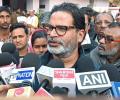
The Supreme Court declined to entertain a petition by Jan Suraaj Party seeking annulment of the 2025 Bihar Assembly elections, citing violation of the Model Code of Conduct. The court directed the party to approach the Patna High Court.
Three academics involved in drafting a controversial NCERT textbook chapter on corruption in the judiciary have approached the Supreme Court to defend their work, stating it was a collective effort and not the view of any single individual.
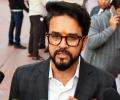
In a relief to former BCCI president Anurag Thakur, the Supreme Court on Thursday cleared decks for his association with the board by modifying its January 2017 order.

The Supreme Court has directed the Election Commission to display the names of those on the 'logical discrepancies' list at various public offices in West Bengal, addressing concerns about irregularities in the voter rolls.
The Centre has asked the Supreme Court to reconsider its judgements decriminalising adultery and same-sex relationships, arguing they were based on a subjective application of 'constitutional morality'.
The Supreme Court on Friday issued fresh notices to Anil Ambani and the Anil Dhirubhai Ambani Group (ADAG) on a PIL seeking a court-monitored probe into alleged massive banking and corporate fraud involving the firm and its group companies.
